Eastern Zhou dynasty/Gold
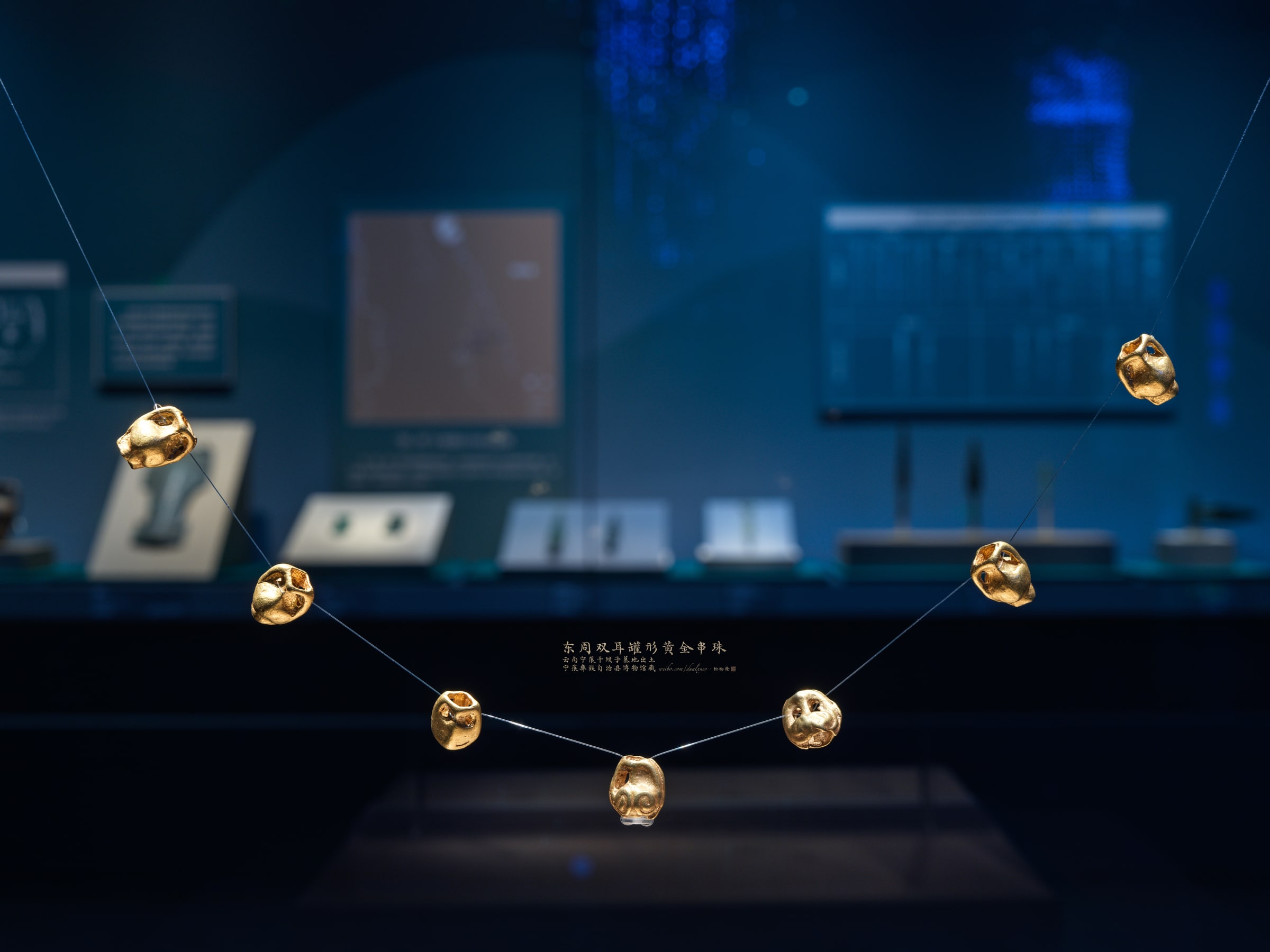
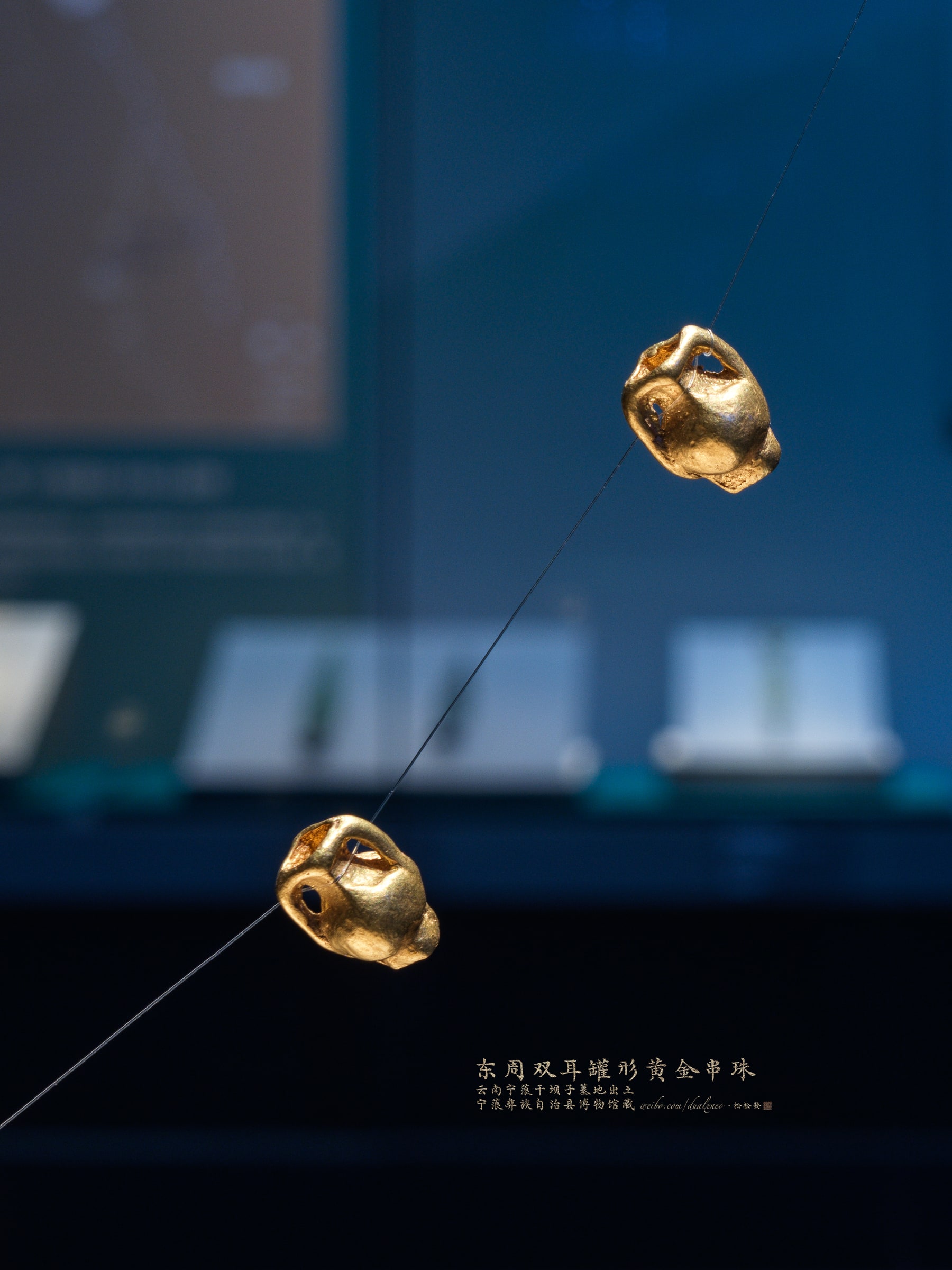
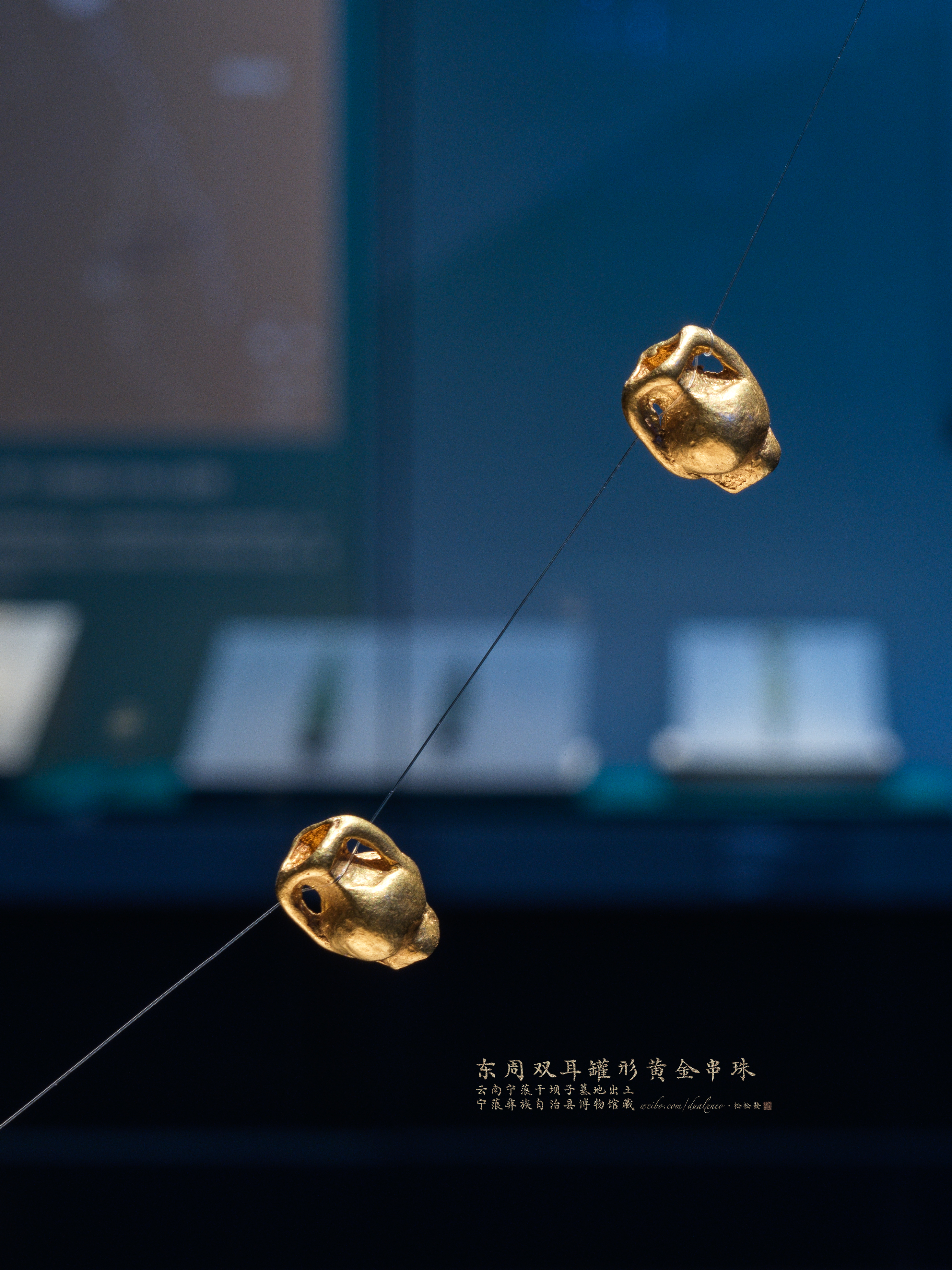
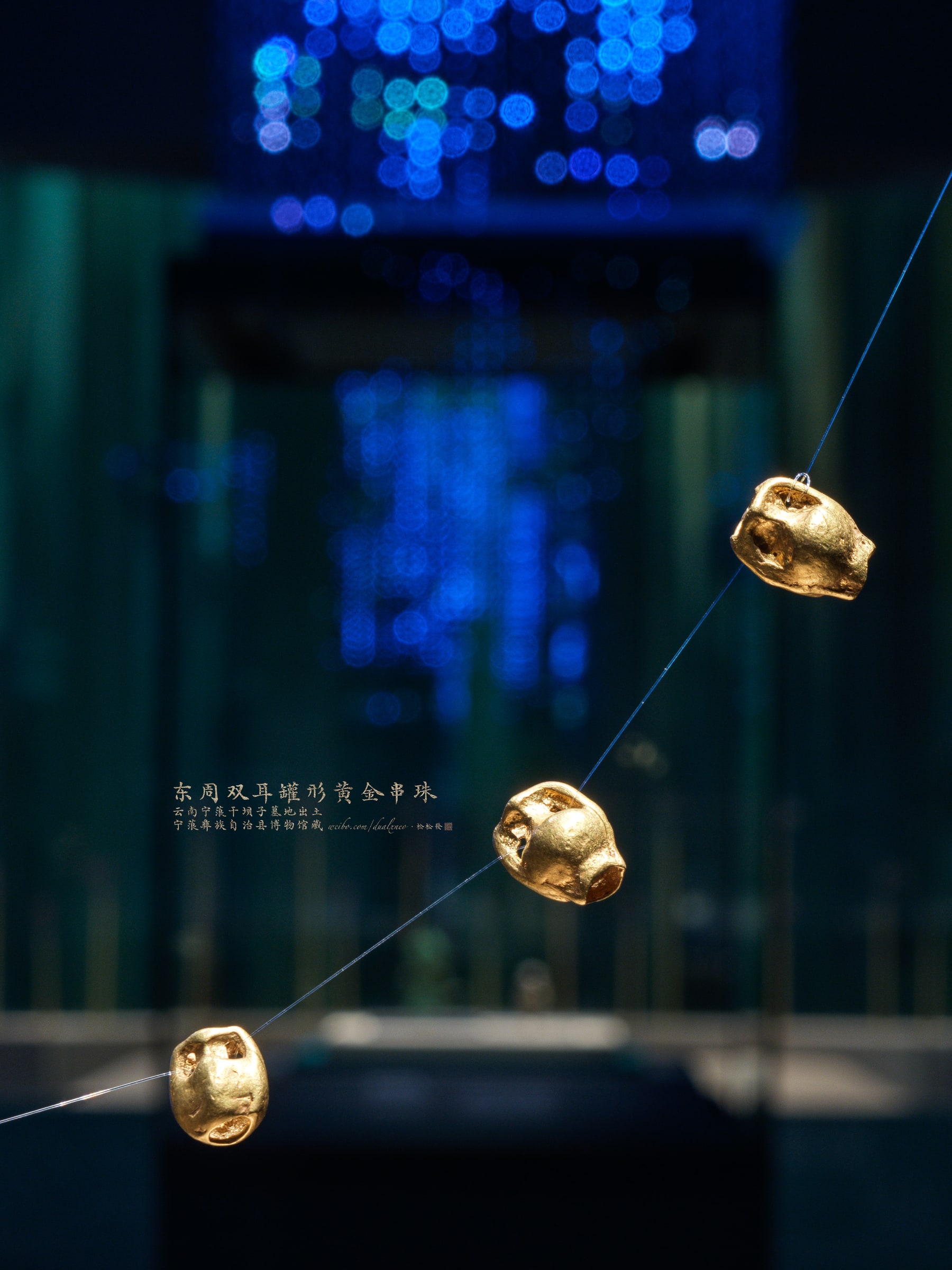
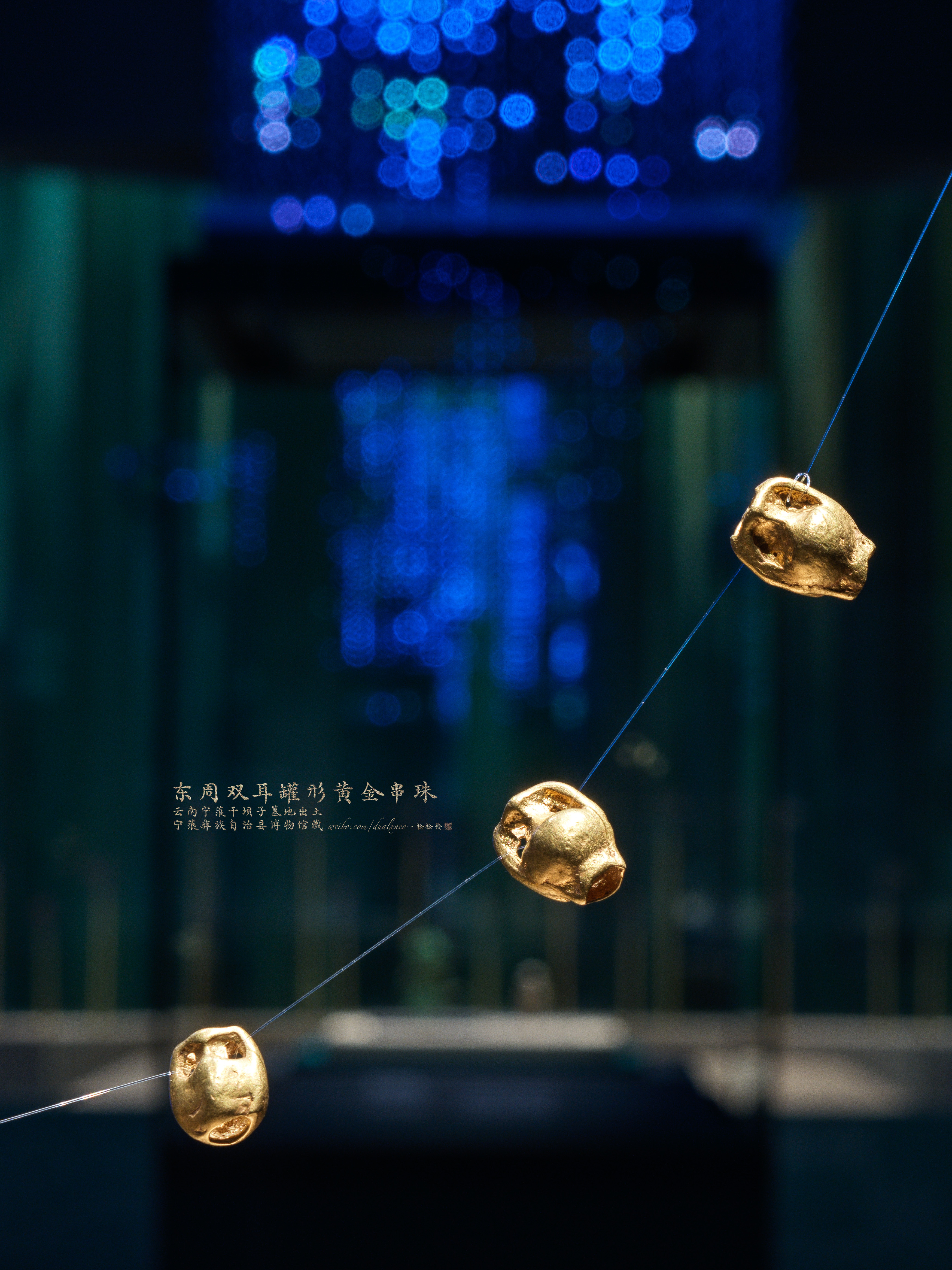
Gold beads in the form of double-handled jars
A group of seven Eastern Zhou gold beads, each shaped as a hollow jar with two handles and threaded on a fine cord. Excavated from Ganbazi cemetery in Ninglang, Yunnan; now in the Museum of Ninglang Yi Autonomous County.
Huang Songtao (Songfa) · CC BY 4.0

Huang Songtao (Songfa) · CC BY 4.0

Huang Songtao (Songfa) · CC BY 4.0
Huang Songtao (Songfa) · CC BY 4.0

Huang Songtao (Songfa) · CC BY 4.0


Huang Songtao (Songfa) · CC BY 4.0


Huang Songtao (Songfa) · CC BY 4.0

Image Sharing & Citation
Photos are shared under CC BY 4.0: free to download, modify, and use commercially with credit and a link to this page. This license applies to photos only; object descriptions and articles are subject to standard citation practices.
Cite this object record. The access date uses your browser’s current date.
- Name
- Gold beads in the form of double-handled jars
- Period
- Eastern Zhou dynasty
- Material
- Gold
- Collection
- Museum of Ninglang Yi Autonomous County
- Findspot
- Ganbazi cemetery, Ninglang, Yunnan
- Text by
- 黄松涛(松松發文物君) / Huang Songtao
- Photography
- 黄松涛(松松發文物君) / Huang Songtao
- Photography equipment
- Hasselblad X2D 100C · XCD 4/45P
Description
Gold beads dating to the Spring and Autumn–Warring States periods. Each bead takes the form of a jar with two handles, a rounded belly and a hollow interior. Handles project from either side of the shoulder, allowing the beads to be threaded together. The form is modelled on double-handled jars used in daily life by inhabitants of the mountainous regions of northwestern Yunnan; some studies associate this jar type with the Di-Qiang tradition. This group consists of seven gold beads threaded on a fine cord. It was excavated from the Ganbazi cemetery in Ninglang, Yunnan, and is now held by the Museum of Ninglang Yi Autonomous County.
Published