Middle Western Han dynasty/Wood
Four-colour wooden gangmao amulet
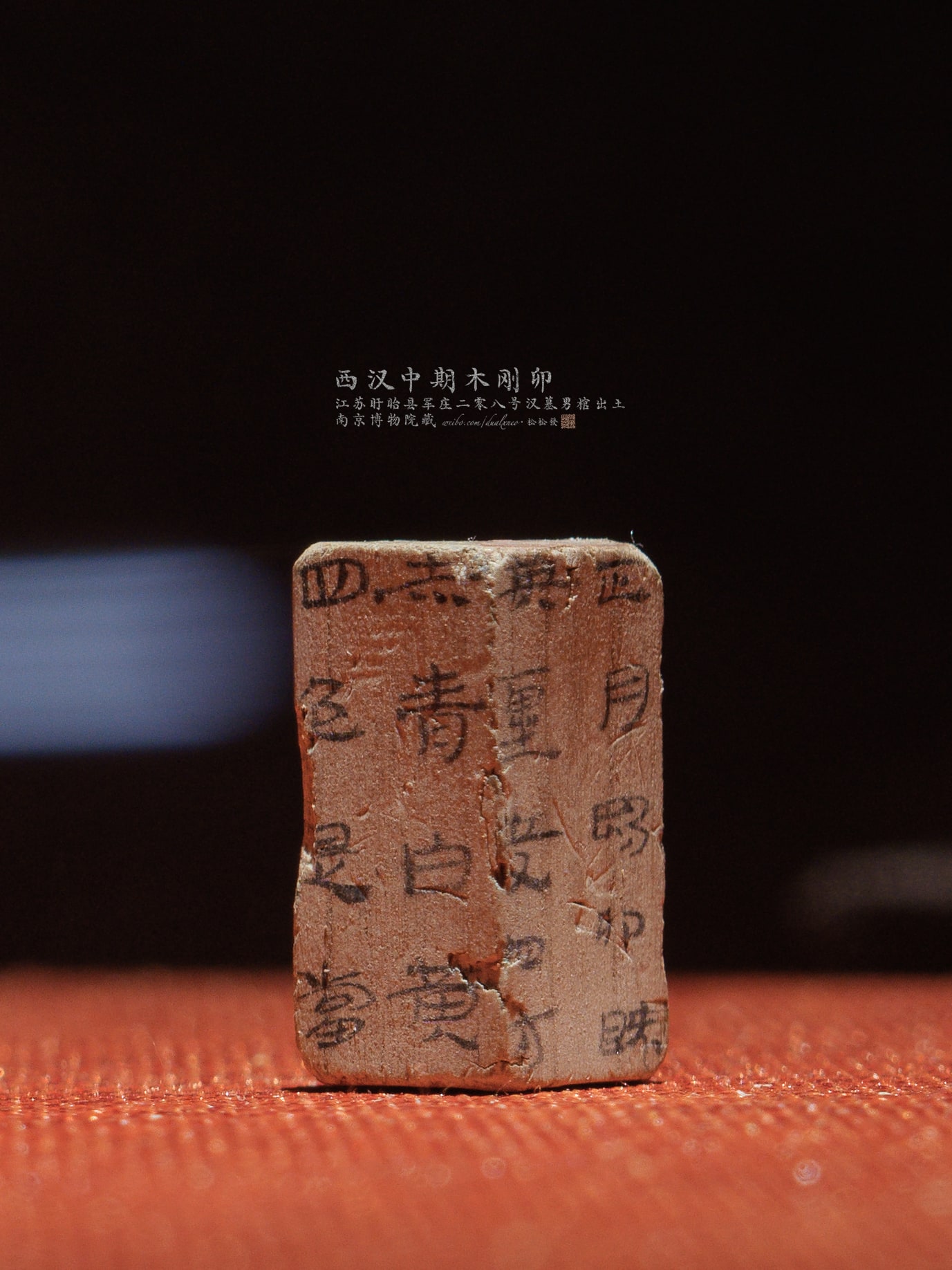
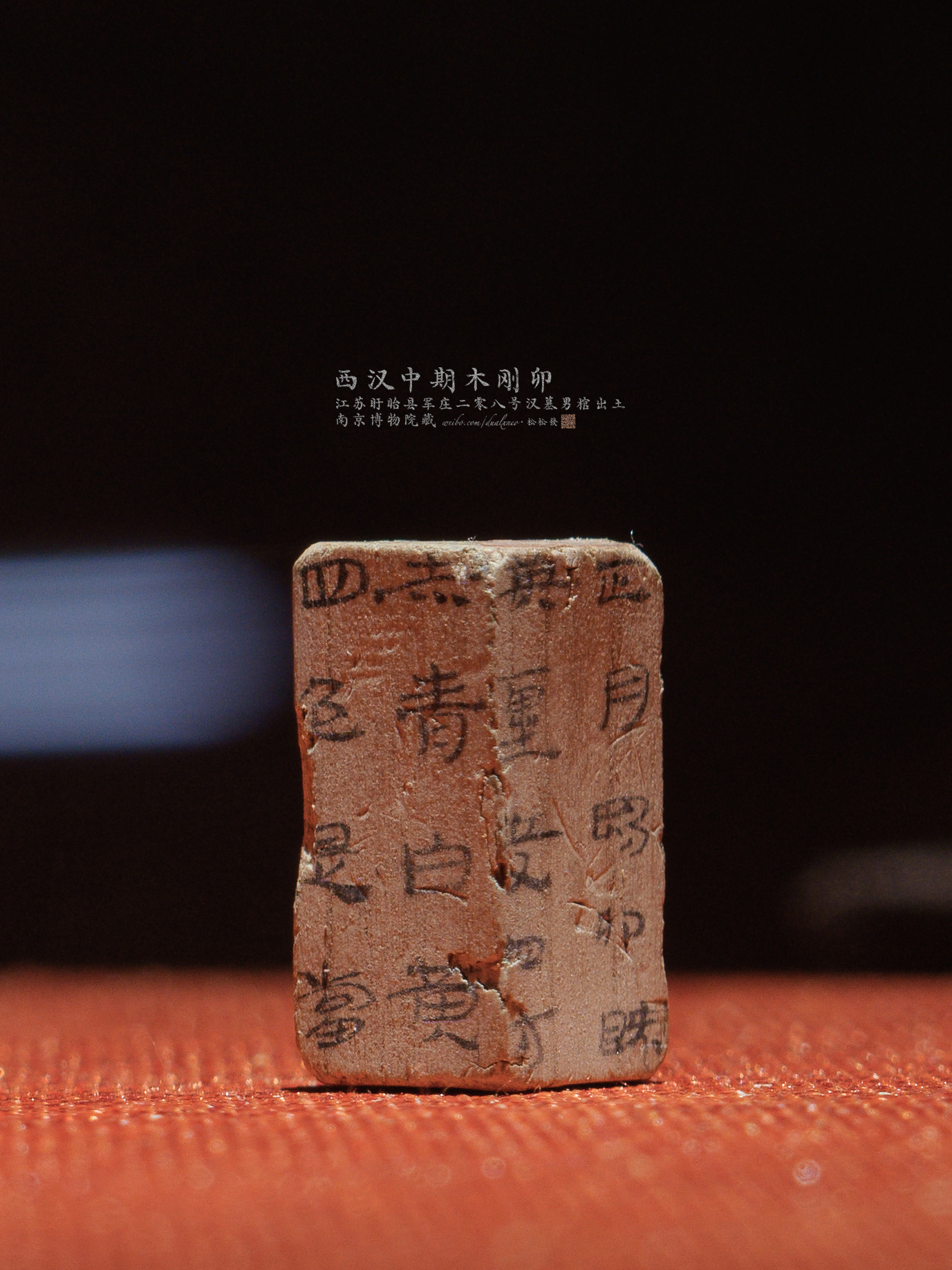
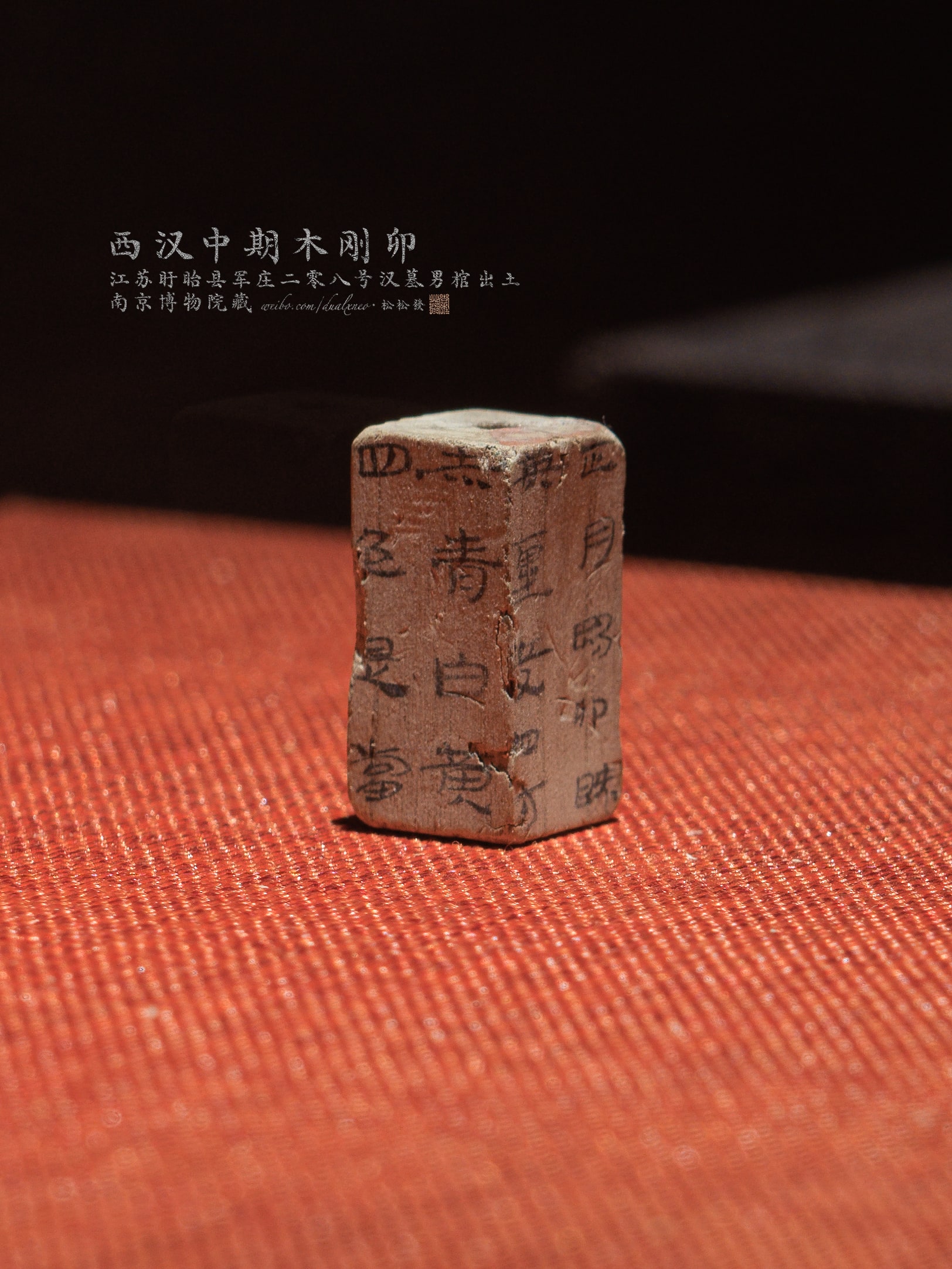
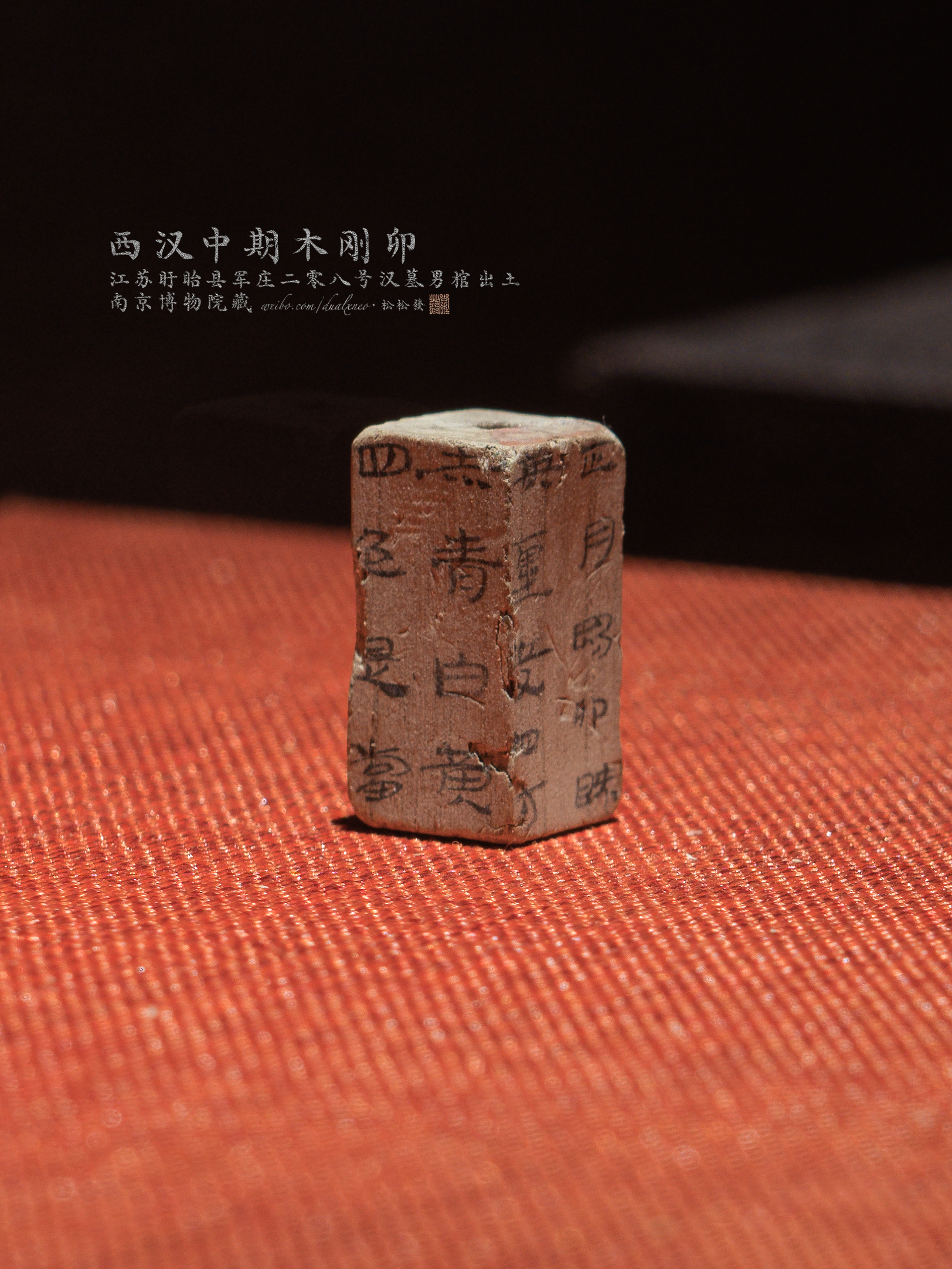
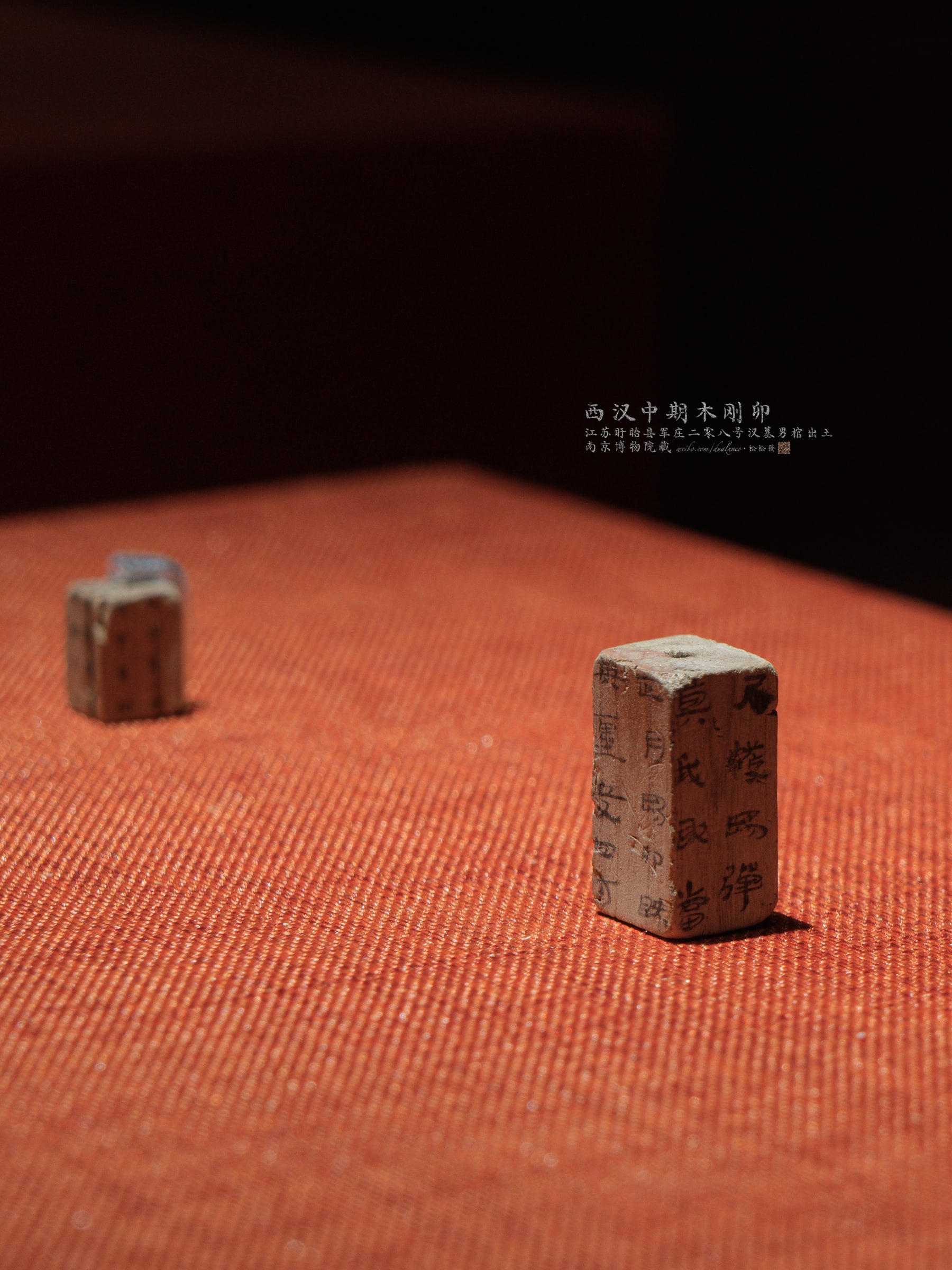
A wooden gangmao amulet from the middle Western Han period, with a 34-character ink inscription on four faces and traces of painted colours around its vertical perforation. Excavated from Han tomb M208 at Junzhuang, Xuyi, Jiangsu; now in Nanjing Museum.
Huang Songtao (Songfa) · CC BY 4.0
Huang Songtao (Songfa) · CC BY 4.0
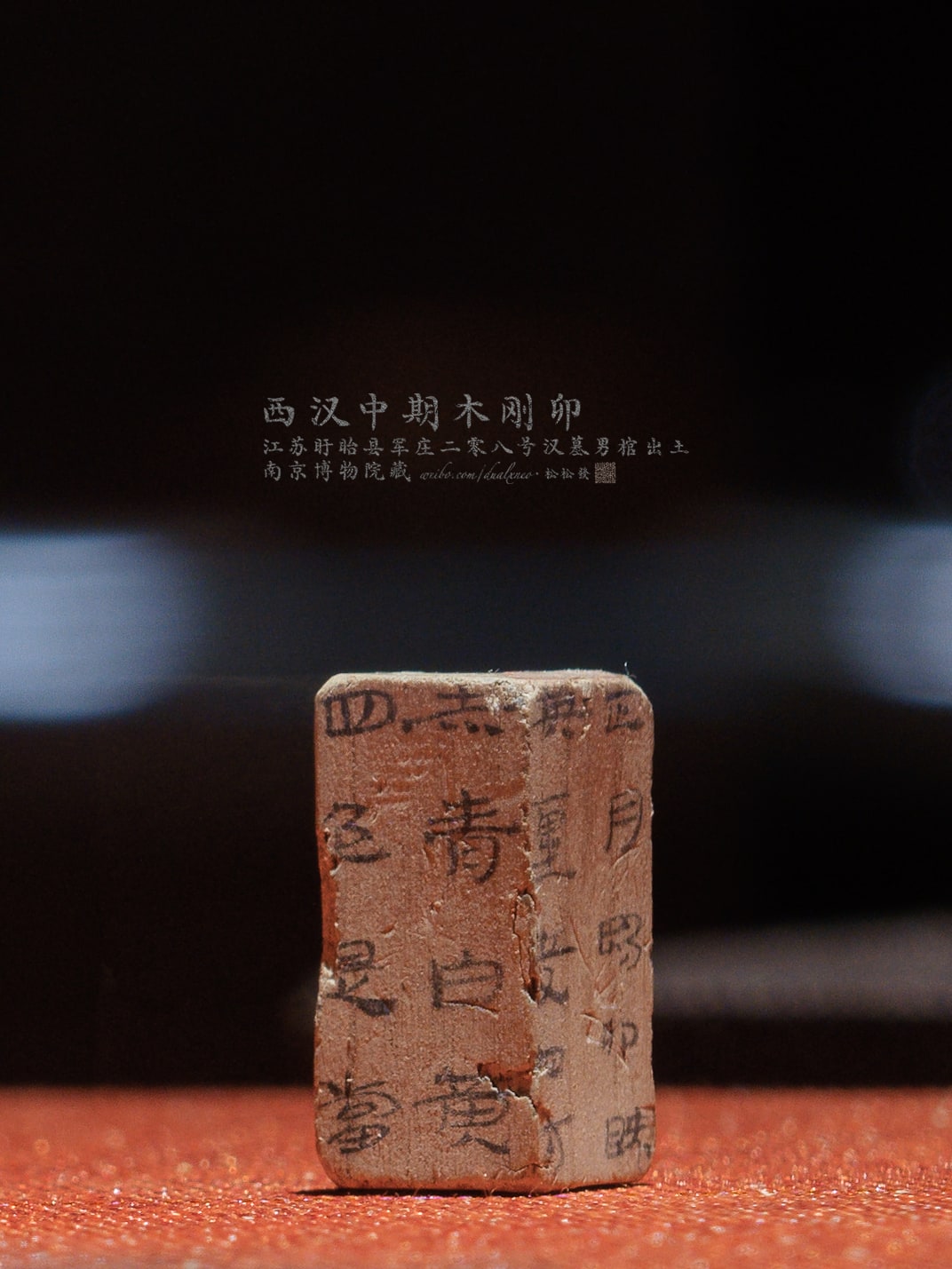
Huang Songtao (Songfa) · CC BY 4.0
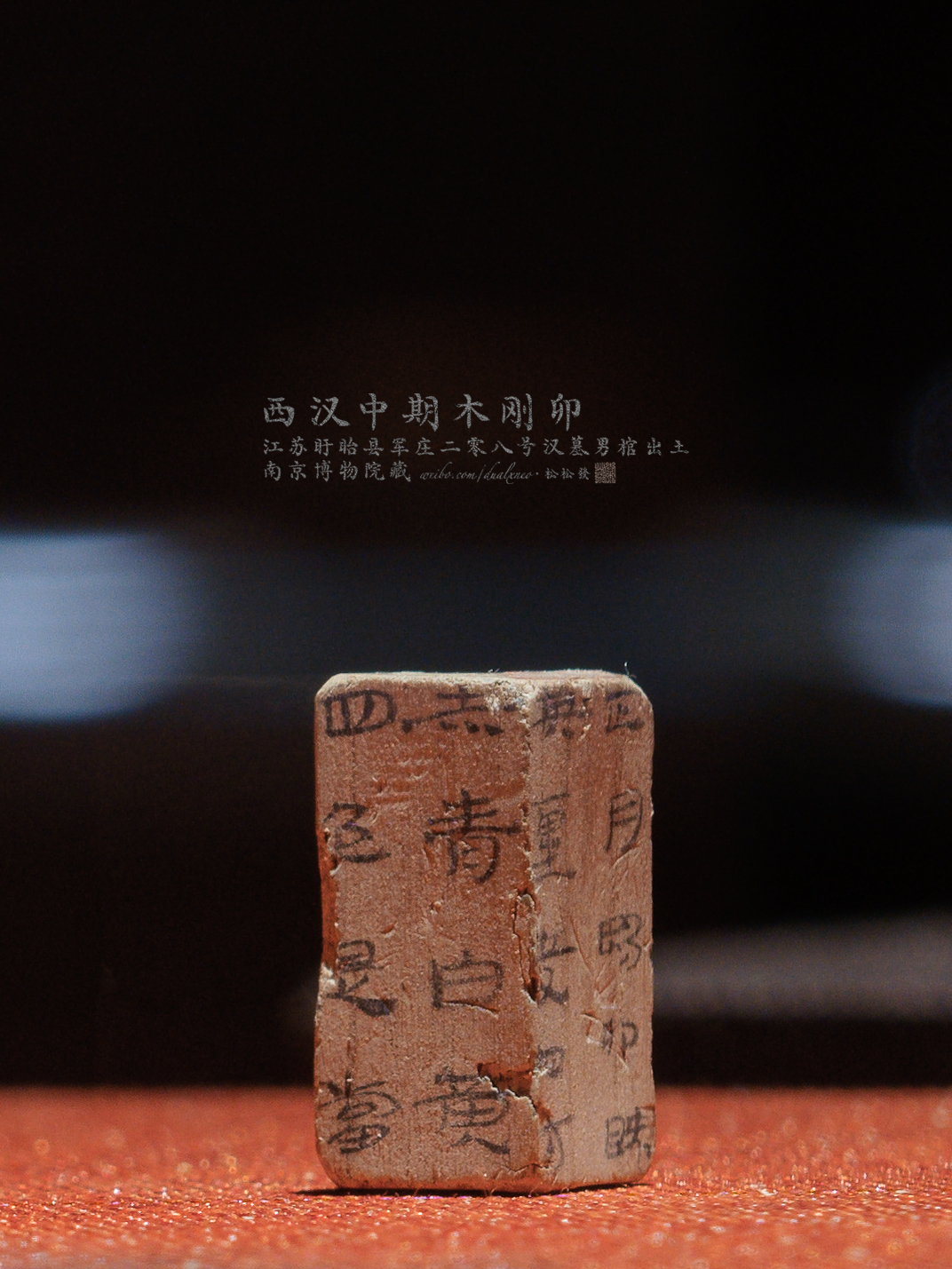
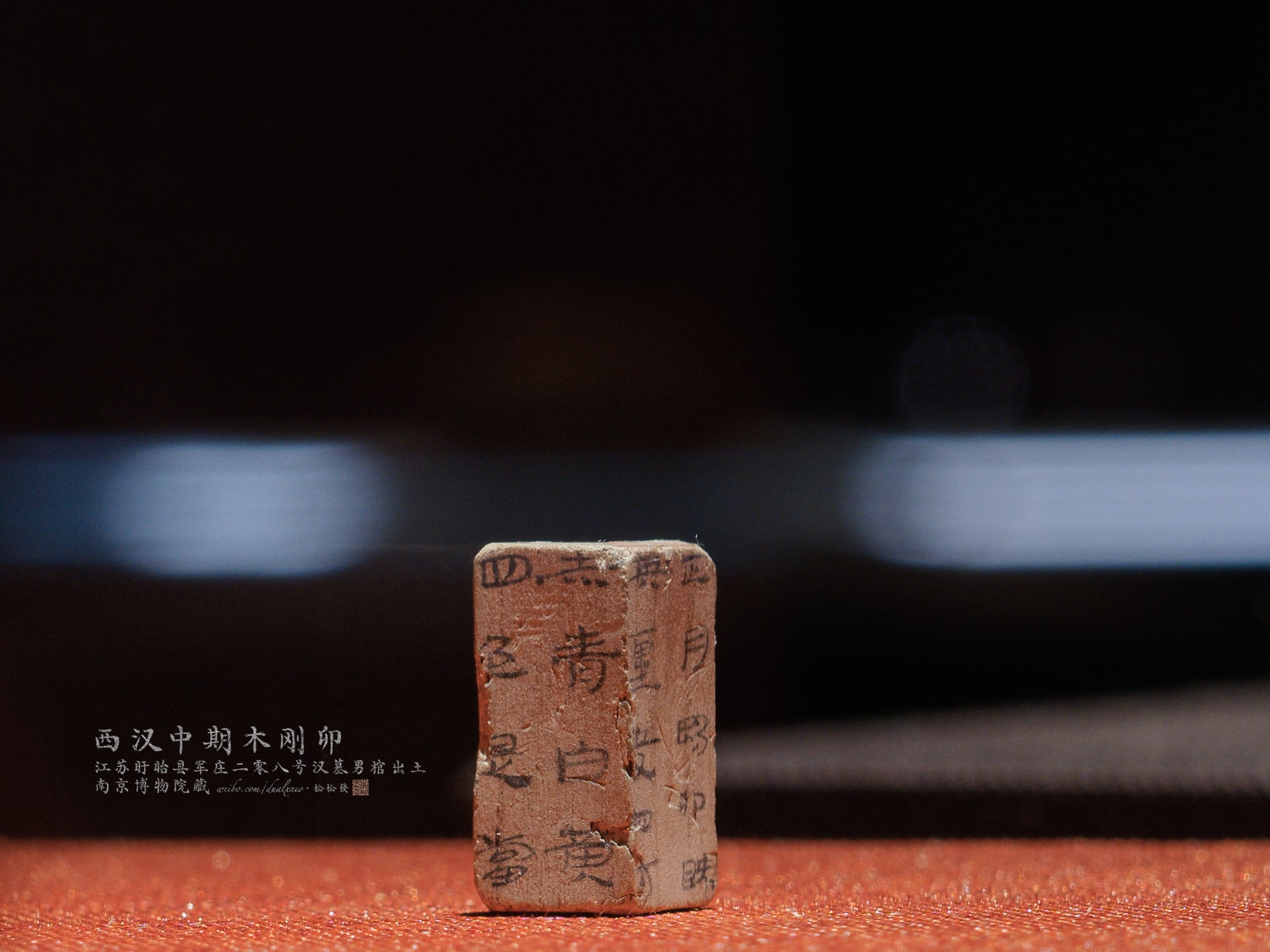
Huang Songtao (Songfa) · CC BY 4.0
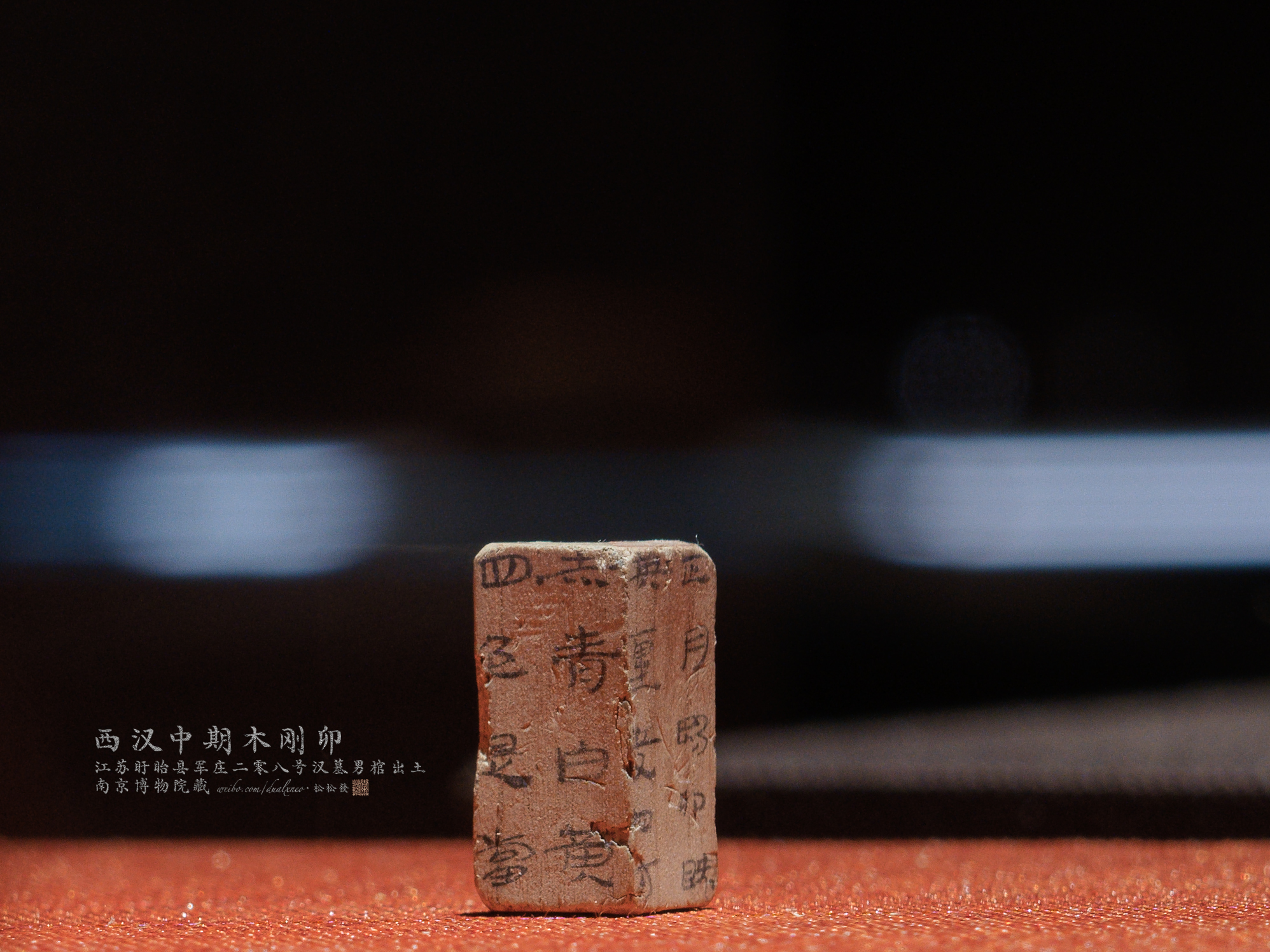
Huang Songtao (Songfa) · CC BY 4.0
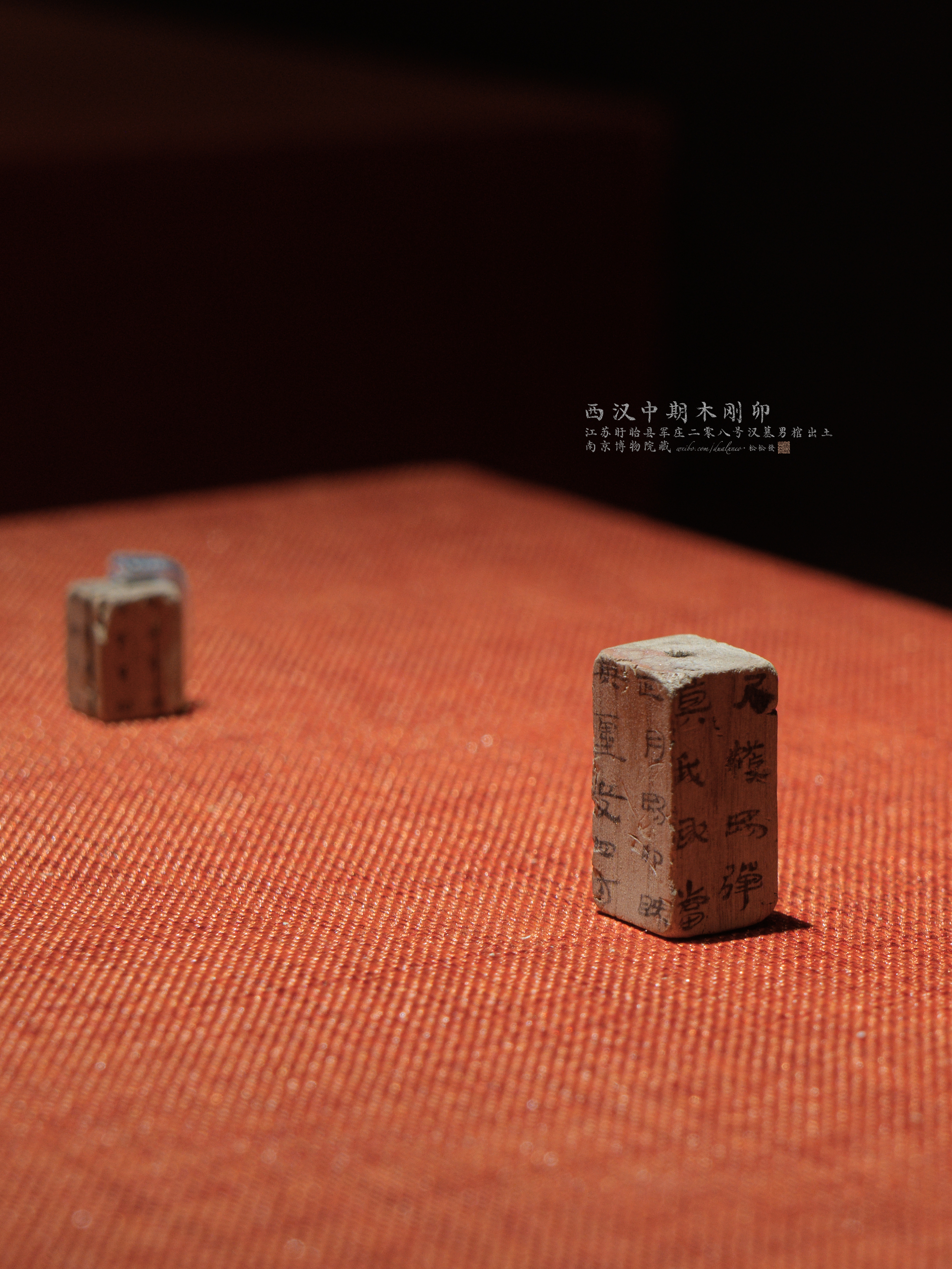
Image Sharing & Citation
Photos are shared under CC BY 4.0: free to download, modify, and use commercially with credit and a link to this page. This license applies to photos only; object descriptions and articles are subject to standard citation practices.
Cite this object record. The access date uses your browser’s current date.
- Name
- Four-colour wooden gangmao amulet
- Period
- Middle Western Han dynasty
- Material
- Wood
- Dimensions
- Length 0.85 cm; width 0.95 cm; height 1.7 cm
- Collection
- Nanjing Museum
- Findspot
- Centre of the southern coffin, Han tomb M208, Junzhuang, Xuyi, Jiangsu
- Text by
- 黄松涛(松松發文物君) / Huang Songtao
- Photography
- 黄松涛(松松發文物君) / Huang Songtao
- Photography equipment
- Hasselblad X2D 100C · XCD 4/45P
Description
This wooden gangmao amulet dates to the middle Western Han period. Its surface is light brown. Rectangular in form, it has a central perforation running from top to bottom. Each of the four outer faces bears two lines of ink writing in clerical script, comprising thirty-four characters in total:
正月刚卯既央,灵殳四方。赤青白黄,四色是当。帝令祝融,以教夔龙。庶蠖刚瘅,莫我敢当。
Blocks of red, white, blue-green and black surround the perforation on the top and bottom, corresponding to the inscription’s phrase “赤青白黄,四色是当” (“red, blue-green, white and yellow; the four colours are in their proper places”). Gangmao were worn as protective amulets during the Han dynasty. The painted colours illustrated in the excavation report represent their condition at the time of discovery; they had already changed by the time the report was written. The yellow is now almost impossible to see.
The commentary on “正月刚卯” in the Biography of Wang Mang in the Book of Han records several descriptions of these amulets. Fu Qian states that they were made on a mao day in the first lunar month and worn on a leather belt. He gives their dimensions as three cun long and one cun wide. Jin Zhuo describes a four-sided amulet one cun long and five fen wide, pierced through the centre and furnished with coloured silk tassels below. He records two inscriptions, beginning “正月刚卯既央” and “疾日严卯” respectively. Yan Shigu notes that jade gangmao were often recovered from the ground and considers Fu Qian’s account consistent with their size and inscriptions. He explains Wang Mang’s prohibition of gangmao and metal knife money by the components 卯, 金 and 刀 in the character 劉, the Han imperial surname.
The Treatise on Carriages and Dress, Part II, in the Book of the Later Han describes distinctions of rank in gangmao materials: white jade for the emperor and marquises, with black rhinoceros horn and ivory among the materials used at lower ranks. Peach wood may have been the option for commoners. The silk cords used to suspend the amulets were also subject to distinctions of rank.
This amulet measures 0.85 cm in length, 0.95 cm in width and 1.7 cm in height. It was excavated from the centre of the southern coffin in Han tomb M208 at Junzhuang, Xuyi, Jiangsu. Its object number is M208:216, and it is held by Nanjing Museum.
References
- 《東陽城與東陽漢墓》, wooden objects: gangmao amulet (M208:216).
Published